The University of the East (UE), through its Office of Research Coordination (ORC), successfully conducted a two-day Seminar-Workshop on Writing for Publication on January 29–30, 2026, at the Briefing Room of UE Manila.
The activity gathered faculty-researchers from both the Manila and Caloocan campuses in a collaborative effort to strengthen the University’s research culture and support scholarly publication. Designed not only as a lecture series but also as an intensive writeshop, the program provided participants with practical guidance and hands-on mentoring to help them move their research closer to publication.
In his opening remarks, UE Manila Chancellor Louie A. Divinagracia proposed the concept of the Warriors of Wisdom of UE (WOW UE) as a defining identity for the University’s academic community—faculty members who actively contribute to knowledge production and global scholarly engagement. He emphasized that the Seminar-Workshop on Writing for Publication was not merely about fulfilling compliance requirements or adding credentials to a curriculum vitae, but about strengthening the University’s presence in international university rankings such as QS and Times Higher Education (THE). With research serving as the “currency” of global academic prestige, he encouraged faculty members to move beyond a “publish or perish” mindset and instead embrace a “publish and flourish” approach by refining their scholarly work for global impact and making sure that this finds print in reputable journals and.
ORC Director Dr. Lydia R. Leonardo agreed with the WOW UE strategy of Chancellor Divinagracia as a critical initiative to cultivate a stronger research culture within the institution. The WOW UE henceforth could seek to promote sustained faculty engagement in scholarly writing and publication, making sure that faculty research gets recognition and hopefully citations that could reflect confidence in the University of the East and contribute to its academic standing. Ultimately, the Chancellor reiterated that scholarly productivity is a meaningful contribution to knowledge creation, institutional development, and student learning—an embodiment of research as purposeful and “formalized curiosity.”
Distinguished faculty-researchers served as resource speakers and mentors during the workshop. Dr. Rex P. Bringula shared valuable insights into the publication process, including publication ethics, identifying reputable journals, and avoiding predatory outlets. Dr. Axel H. Arriola discussed the anatomy of a publishable paper, guiding participants through the essential components of a strong research manuscript and emphasizing clarity in presenting arguments and results. Meanwhile, Dr. Julius Cesar R. Pascual focused on writing with clarity, coherence, and scholarly impact, addressing common writing challenges and the effective use of citations in academic work.
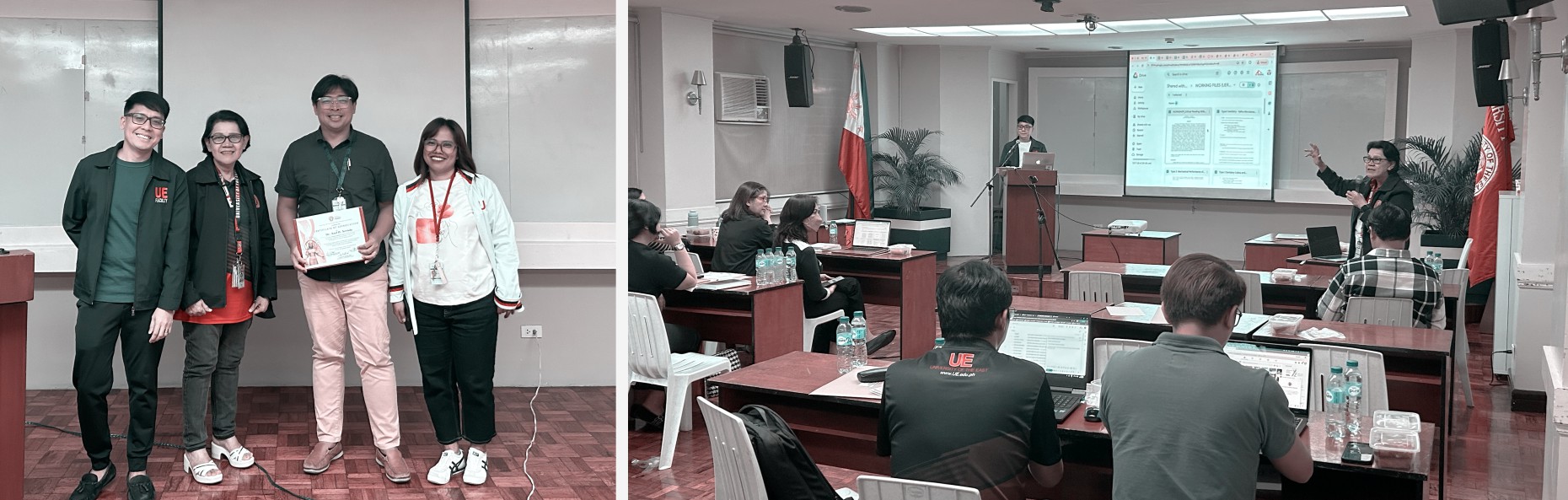
Beyond the lectures, the workshop emphasized mentorship and collaboration. Participants were grouped according to their research outputs and were closely guided by the resource persons and Dir. Leonardo. The writeshop sessions allowed faculty members to draft, revise, and refine key sections of their manuscripts—including the abstract, introduction, methodology, results, and discussion—while receiving immediate feedback.
Dr. Leonardo also presented the workshop guidelines and provided a synthesis of the discussions, effectively connecting the various sessions and reinforcing the core principles of writing for publication. Her recap of Day 1 helped participants consolidate their learning and better prepare their revised outputs for presentation.
Among the promising manuscripts developed and refined during the workshop were studies on robotics training applications, out-of-field science teaching experiences, AI-powered essay evaluation systems, university marketing strategies, artificial intelligence in student research, critical reading strategies, blended learning outcomes, salivary microbiota correlations in dental patients, and generative AI-based recommender systems. These diverse research topics reflect the interdisciplinary strengths of UE’s faculty and the University’s growing engagement in innovative and impactful scholarship.
The workshop recorded 32 participants in the morning session and 24 in the afternoon session, with 28 faculty members responding to the evaluation. Participants expressed appreciation for the practical nature of the sessions and the opportunity to receive direct, constructive feedback on their manuscripts.
In his closing remarks, UE Caloocan Chancellor Victor R. Macam, Jr. emphasized that academic publication goes beyond being a professional requirement, as it enables research to become part of a broader scholarly and societal conversation. He underscored that published research strengthens teaching and learning in the University, informs instructional practices, and contributes to the continuous growth of the academic community. Hence, when faculty members choose to publish their work, they help ensure that research outcomes extend beyond classrooms and offices and reach wider educational and social contexts.
Chancellor Macam further highlighted that each credible publication, no matter how modest it may seem, adds to the collective knowledge of society. He expressed his hope that the seminar-workshop not only clarified the publication process for participants but also renewed their confidence in the value and relevance of their scholarly work.
Through initiatives such as this seminar-workshop, the ORC continues to foster a supportive research environment—empowering UE faculty to produce quality scholarly work, contribute to knowledge creation, and enhance the University’s academic standing.
The University of the East (UE), through its Office of Research Coordination (ORC), actively participated in the 1st National Conference on Research Integrity held on February 12–13, 2026, at the Rizal Park Hotel. Anchored on the theme “Improving Philippines Research Systems with Research Integrity,” the pioneering conference by the University of the Philippines (UP) Manila convened leaders from Higher Education Institutions (HEI), research organizations, journals, funding agencies, and media to collectively (re)introduce and strengthen the culture of integrity in Philippine research.
Representing UE were Dr. Lydia R. Leonardo, Director of the ORC, and Dr. Julius Cesar R. Pascual, Professor and Program Coordinator of the College of Arts and Sciences (CAS), affirming the University’s commitment to scholarly research.
The two-day scientific program featured a comprehensive and high-level set of sessions designed to elevate Research Integrity (RI) at the researcher, institutional, societal, national, and international levels. Discussions began with foundational RI concepts, global perspectives, and its international principles. Plenary sessions contextualized RI within the Philippine socio-cultural landscape, examining local challenges, enabling mechanisms, and culturally responsive practices.
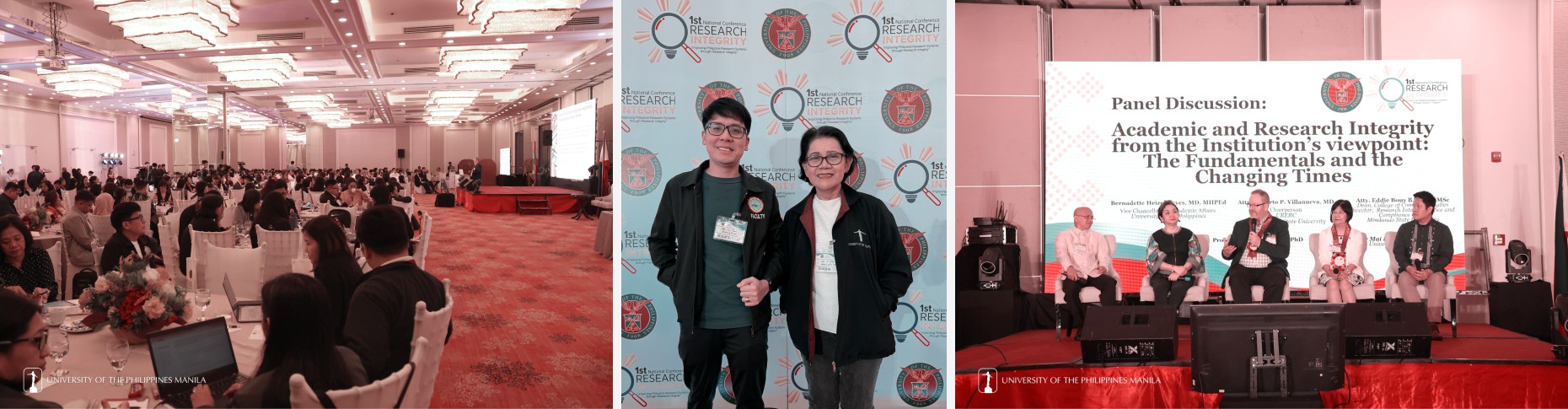
Institutional perspectives were highlighted through panels of State Universities and Colleges (SUC) and HEIs in the Philippines that explored and examined threats to academia and RI, the integration of Artificial Intelligence (AI), and evolving governance and policy structures. Core responsible conduct of research issues such as Questionable Research Practices (QRP), authorship attribution, and predatory publishing were rigorously addressed, alongside discussions on the role of journals and professional societies in safeguarding publication standards.
A key feature of the conference was the collaborative dialogue on establishing and strengthening Offices of Research Integrity (ORI), including readiness considerations, whistleblower protections, and clearly defined institutional responsibilities. The event culminated in the development of the national declaration outlining guiding principles, stakeholder commitments, and concrete next steps toward forming a national RI network. With the participation of representatives from institutions such as the UE and UP, the conference signaled a significant milestone in shaping the country’s research governance landscape. Through its ORC leadership and faculty engagement, UE continues to advance a culture of integrity, accountability, and excellence in research.
The University of the East (UE) successfully conducted the 20th UE Research Forum on March 16, 2026, at the Conference Room of the Tan Yan Kee Building, UE Caloocan Campus. As one of the major events of the Caloocan Week, it gathered members of the university’s academic community in a moment of scholarly sharing, reflection, and engagement centered on ongoing research initiatives within the institution.
The forum was attended by 38 university officials and faculty members and 595 students, reflecting the growing interest in research collaboration and knowledge dissemination across different academic units of the university.
The program opened with welcome remarks from the President and Chief Academic Officer, Dr. Zosimo M. Battad, who reaffirmed UE’s commitment to advancing research that contributes to academic excellence and institutional development. The forum then proceeded to the presentation of selected research studies from faculty researchers and their student collaborators representing various colleges and departments.
Among the studies presented were research on tracer outcomes of accountancy graduates, the relationship between reading comprehension and academic performance among accountancy students, the development of fiberboard using stalks of Bakong plant leaves bonded by epoxy resin, the relationship between marketing strategies and student decision dynamics in the University of the East, and a study on academic performance and satisfaction in face-to-face and hybrid learning environments among senior high school students.
A highlight of the forum was the Best Research Award, accompanied by a cash prize of ₱5,000, personally donated by Pres. Battad. The award recognized two outstanding research presentations: Engr. Anthony T. De Castro for his study on the use of Bakong plant leaves as fiberboard material, and Efren C. Gimoto Jr. and Rossanna V. Mendoza for their research examining the relationship between university marketing strategies and student decision dynamics.
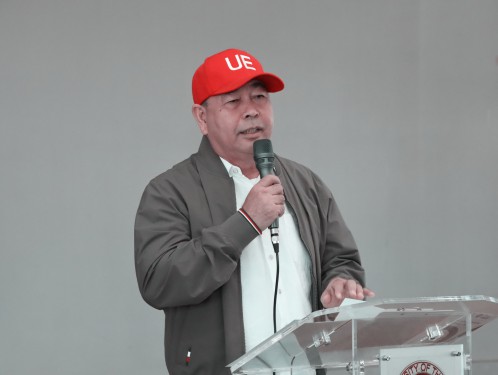
UE President Zosimo M. Battad delivers his message during the 20th UE Research Forum, reaffirming the University’s commitment to advancing research and academic excellence.
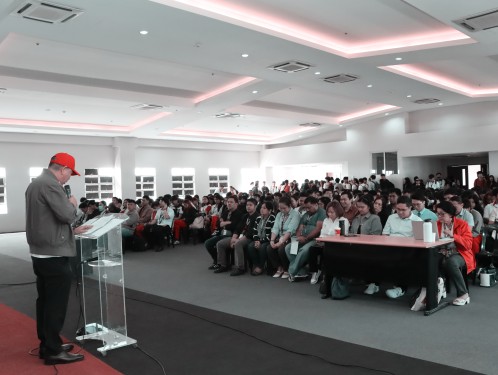
UE President Zosimo M. Battad addresses a full house during the 20th UE Research Forum, as faculty members and students gather for a morning of research presentations and academic exchange.
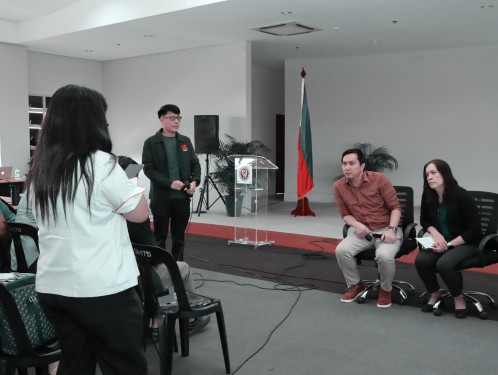
Curiosity and critical thinking took center stage at the 20th UE Research Forum. A student participant raises a thoughtful query during the open forum, reflecting the vibrant intellectual discourse that defined this year’s gathering of the UE academic community.
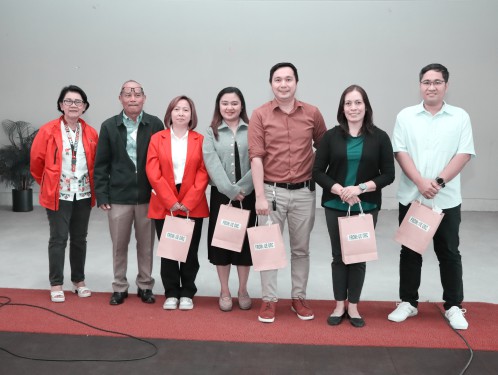
Awardees of the 20th UE Research Forum pose with Director Lydia R. Leonardo and Chancellor Victor R. Macam Jr. during the awarding, recognizing their valuable research contributions.
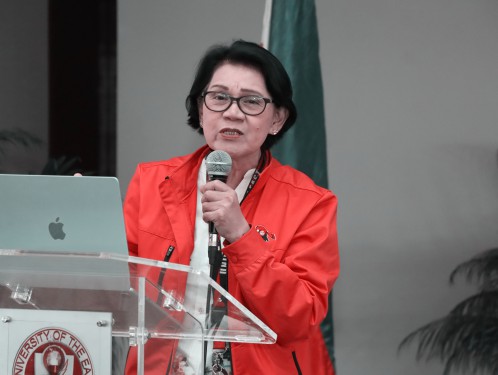
Director Lydia R. Leonardo delivers the synthesis of the program, highlighting key insights and takeaways from the research presentations during the 20th UE Research Forum.
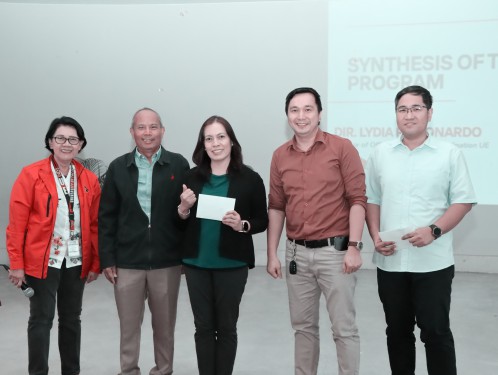
Recipients of the Best Research Award at the 20th UE Research Forum pose with Director Lydia R. Leonardo and Chancellor Victor R. Macam Jr. The award was shared by Dr. Efren C. Gimoto Jr. and Dr. Rossanna V. Mendoza, and Engr. Anthony T. De Castro.
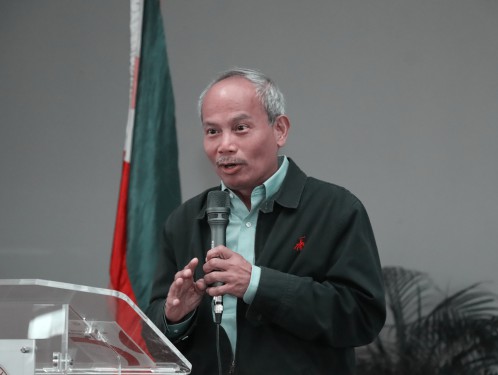
Chancellor Victor R. Macam Jr. delivers the closing remarks, emphasizing the importance of sustaining a strong research culture at the 20th UE Research Forum.
The two open forum sessions encouraged active participation from attendees. Faculty members and students posed insightful questions to the presenters, leading to lively discussions on topics such as research utilization, methodological decisions made by the proponents, interpretation of results, and the broader implications of the studies presented. These exchanges reflected the shared commitment of the UE Warrior academic community to critical inquiry and constructive dialogue in research.
By the end of the event, participants described the forum as enriching, well-attended, and productive, highlighting the value of creating institutional spaces where research findings can be shared, discussed, appreciated, and utilized.
The 20th UE Research Forum once again demonstrated UE’s continuing efforts to nurture a vibrant and globally responsive research culture that supports both faculty and student scholars in contributing to the reservoir of knowledge in their respective fields and to the wider community.